when choosing german server hosting, you should focus on network bandwidth and global node coverage capabilities. this article focuses on "how to evaluate the network bandwidth and global node coverage capabilities of german server hosting providers", providing systematic evaluation points and practical suggestions to help technology and procurement decision-makers strike a balance between compliance and performance.
understand the key metrics of network bandwidth
the core indicators to focus on when evaluating bandwidth include bandwidth upper limit (port rate), guaranteed bandwidth (guaranteed bandwidth), concurrency limit and jitter, packet loss rate, and bidirectional throughput. it is also necessary to distinguish between burstable capability and long-term guarantee, clarify whether the port is shared or exclusive, and how the operator handles congestion and priority strategies.
bandwidth measurement and verification methods
actual testing can use multi-point parallel testing (such as iperf, mtr, delay and packet loss detection) to verify the throughput and stability claimed by the provider. it is recommended to conduct multiple measurements in different time windows and different geographical locations, record peak and 95th percentile data, and combine the provider's historical monitoring charts with the original logs to cross-validate the results.
evaluate global node coverage and latency performance
global node coverage includes the distribution of the provider's own pop, cooperative cdn and interconnection partners. focus on evaluating the round-trip delay (rtt) from the node to the target user group, the number of routing hops, and the stability of the cross-continental link. networks with wide coverage but poor cross-domain forwarding often lead to poor experience, so looking at distribution is as important as path quality.
check interconnection structure and backbone network quality
understand the provider's bgp policy, whether it is peered at major internet exchange points (ix), carrier diversity and backbone link redundancy. carrier-neutral data centers and direct peering relationships often result in shorter paths and lower latency. ask to view the asn, peer list, and partial routing mirrors to evaluate the actual interconnection situation.
service level agreement (sla) and real-time monitoring capabilities
the sla should specify bandwidth availability, delay/packet loss thresholds, failure response time, and compensation terms. give priority to vendors that provide real-time bandwidth monitoring, api access, and alarm capabilities to facilitate integration into your operation and maintenance system and quickly locate and track the responsible parties when bottlenecks occur.
elasticity, scalability and security considerations
evaluate whether it supports on-demand port rate expansion, traffic burst processing (burst), and traffic shaping strategies; also pay attention to ddos protection capabilities, traffic cleaning, and backup links. resource elasticity and multi-line redundancy can maintain business continuity during traffic fluctuations or attacks and are an important part of long-term cost and risk control.
summary and practical suggestions
in summary, to evaluate the network bandwidth and global node coverage capabilities of german server hosting providers, one should start from five dimensions: indicator understanding, actual measurement verification, node and interconnection quality, sla and monitoring, and resilience and security. it is recommended to make checklists, require trial or test reports, and include measurable network performance clauses in procurement contracts to reduce risk.

- Latest articles
- A Guide For Newbies On How To Avoid The Hong Kong Vps 10 Yuan Purchase Trap And After-sales Trap Reminder
- Let’s Look At The Performance Guarantee Of Malaysia’s Third Network Cn2 Under High Concurrency During Holidays Through A Case Study
- Where To Open Korean Native IP And Practical Advice On Choosing The Right Package
- Taiwan Server Bidirectional Cn2 Cloud Space And Public Cloud Hybrid Deployment To Achieve Seamless Business Migration
- Stimulating Battlefield Korean And Japanese Server Connection Optimization And Delay Improvement Techniques
- Comparative Evaluation: Analysis Of The Differences Between Building Native IP Addresses In Taiwan And Native IP Addresses In Other Regions
- How To Optimize Cross-border E-commerce Access Speed And Stability Through Cambodia Cn2 Return Server
- Cambodian Server Alibaba Cloud’s Practical Experience In Network Acceleration And CDN Integration
- How To Set Up A Korean Purchasing Agent Group? Precautions And Risk Control Strategies For Compliance Operations
- Practical Experience Sharing On Vps Cambodia Node Selection And Global Deployment Strategy
- Popular tags
-
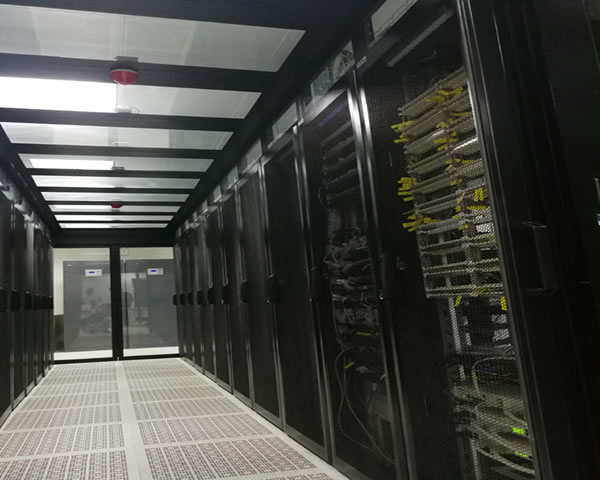
Analysis Of Design And Application Cases Of German Standard Computer Room
this article deeply discusses the design principles and application examples of german standard computer rooms, which is suitable for reference for computer room construction and management personnel. -

Seo Optimization Ideas To Improve User Experience Are Reflected In German Vps Server Hosting
this article discusses how to integrate seo optimization ideas to improve user experience into technology deployment, content strategy and localized operations in a german vps server hosting environment, thereby improving search visibility and user retention. -

How To Find The Best German Minecraft Server IP
This article describes how to find the best German Minecraft server IP to help players easily connect to high-quality Minecraft servers.